22 Open Wardrobe Ideas for Easy Everyday Style
Getting dressed feels easier when you can see everything at a glance, and these open wardrobe ideas show how to build that kind of closet. Instead of digging through closed doors and dark corners, you pick from rails, shelves, and cubbies that keep clothes visible and easy to reach. In this list you will find rolling racks, wall mounted rails, shoe displays, and basket systems that fit bedrooms of every size, from small rentals to large primary suites. Each idea helps you sort clothes by type or color, spot what needs washing, and notice pieces you forgot you owned. Most setups cost less than a fitted wardrobe and take a weekend or less to build. Read through, save your favorites on Pinterest, and start with the rail or shelf that solves your biggest morning problem.
Floating Clothing Rails
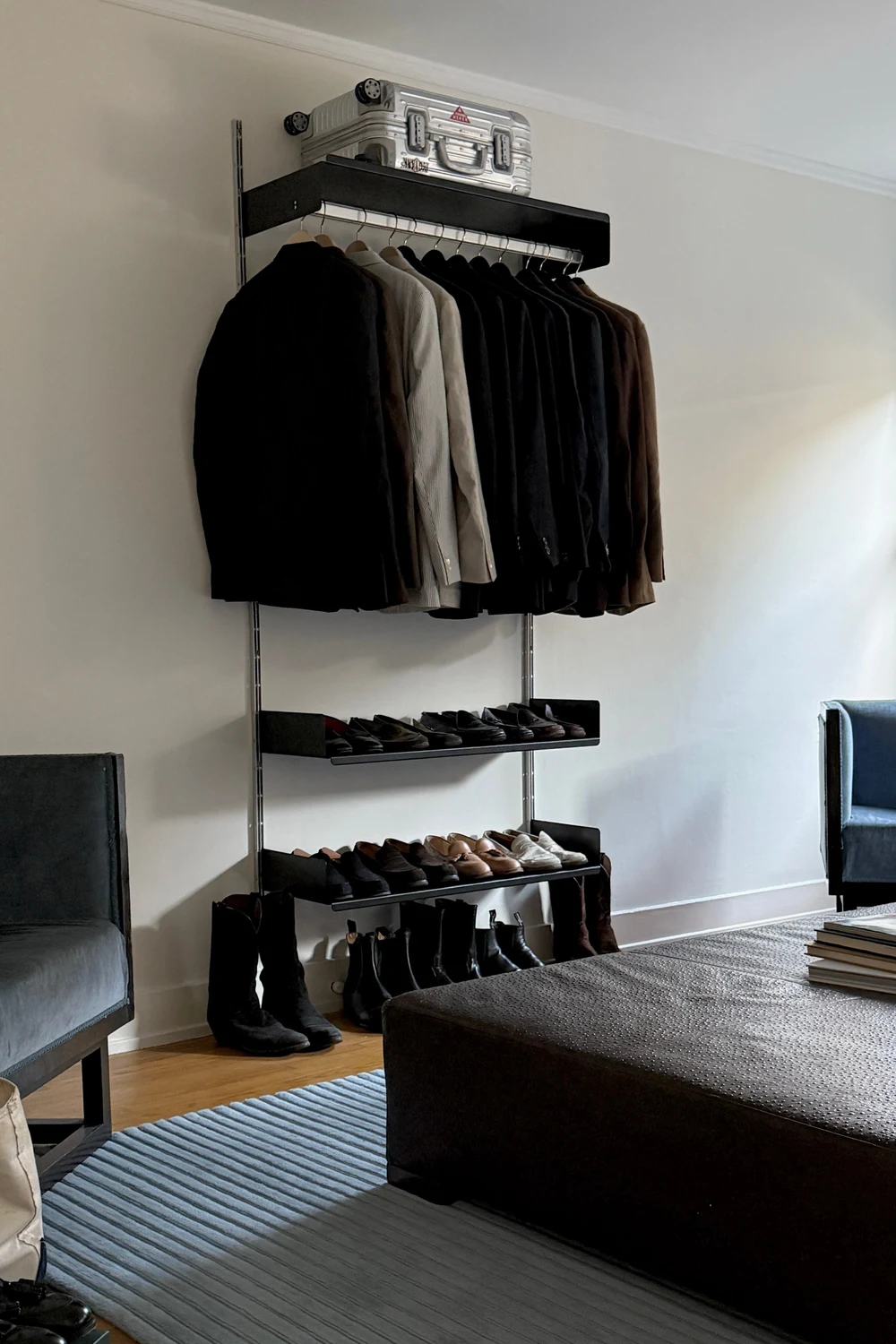
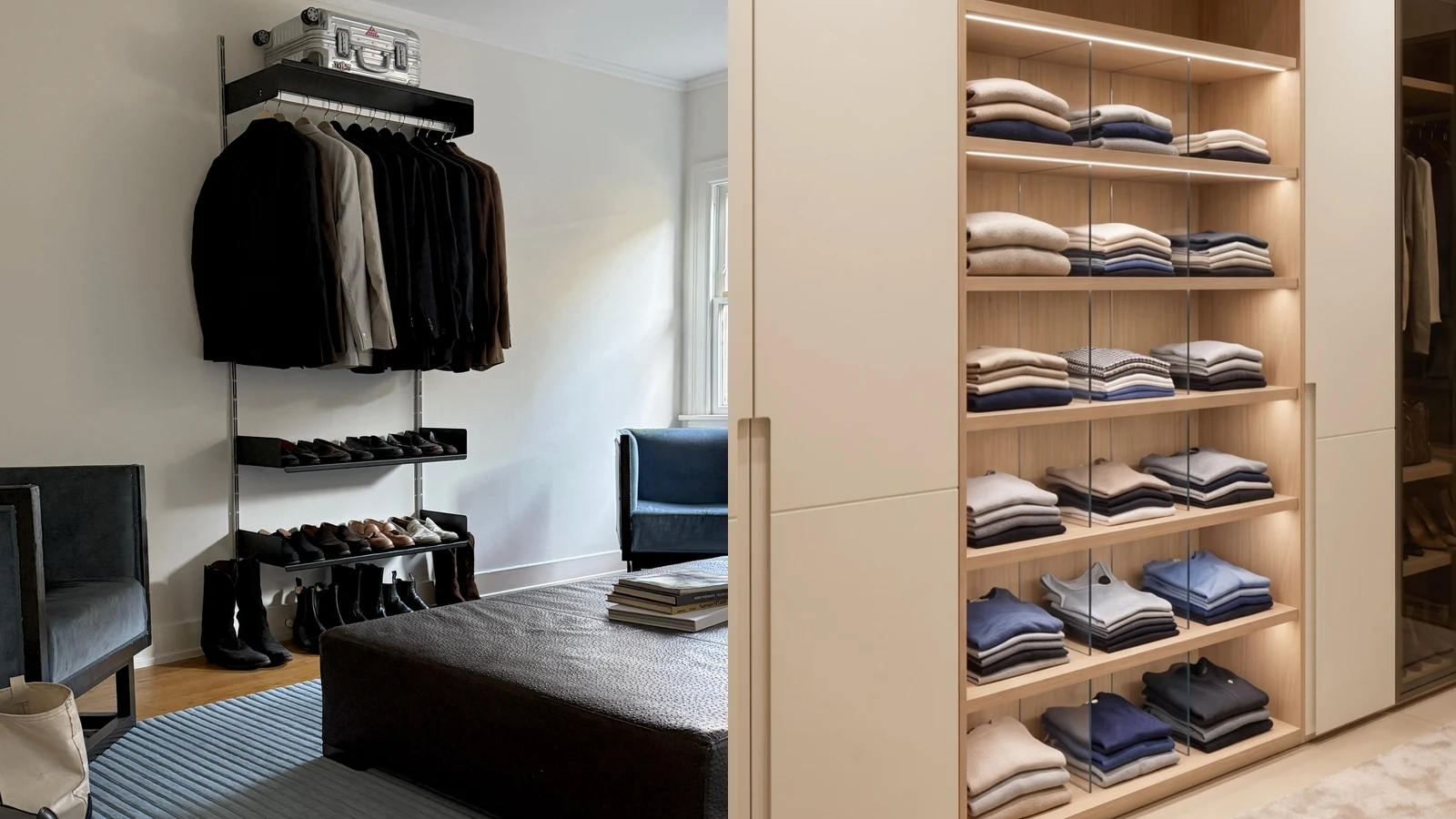
Wall mounted rails free up floor space while keeping outfits in sight. Mount one rail at shoulder height along an empty wall, and hang your worn shirts, jackets, and dresses there in color order. The open view helps you plan outfits, and the empty floor below makes the room feel larger and lighter.
Add a shelf above the rail for hats and bags, and a shoe tray below for pairs you grab. Keep the rail to one row of clothes so it never looks overloaded. When the rail fills up, it signals time to edit, wash, or store pieces elsewhere.
Open Shelf Stacks

- Fold knitwear into neat stacks of four to six items per shelf.
- Sort stacks by type, like sweaters together and tees together.
- Place heavier knits low and light tees high for easy lifting.
- Leave one shelf partly empty so new purchases have a home.
Open shelves suit folded clothes because you see every stack without opening a door. Neat folds read as a display, and color order makes the whole wall look intentional. Refold one stack each week to keep edges crisp and the shelves looking sharp. They suit bedrooms, guest rooms, and dressing areas alike.
Rolling Garment Racks
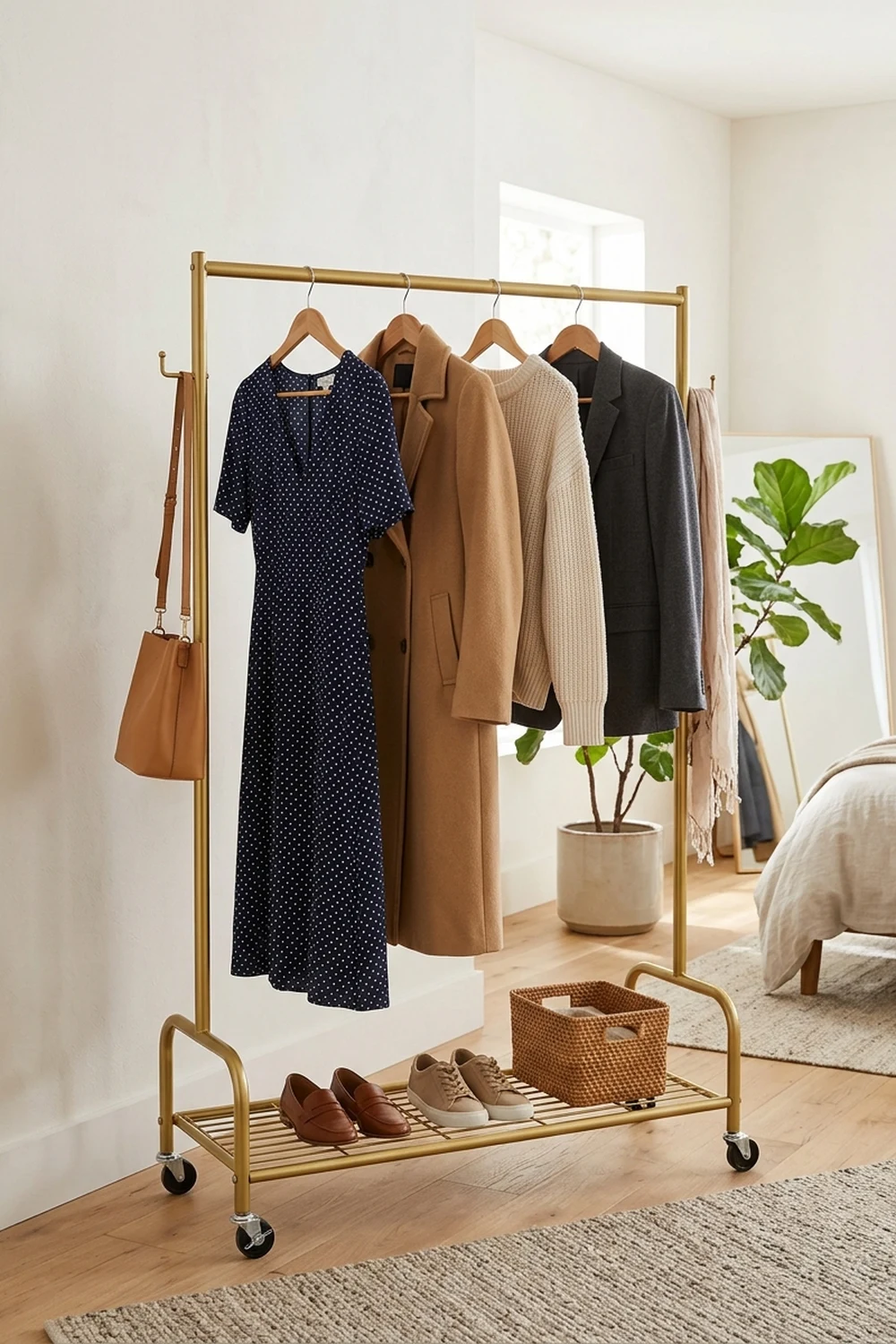
Quick Tip: Park a rolling rack near a mirror and load it with five outfits for the week ahead. Keep shoes for those outfits on the lower bar, and hang tomorrow’s outfit at the front end so mornings start with one easy grab instead of a full closet search.
Rolling racks add closet space without building anything into the wall, which suits renters well. Their wheels let you move outfits to the mirror, the laundry area, or another room with ease. Pick a sturdy metal frame so the rack stays steady when fully loaded with coats.
Ladder Style Hangers
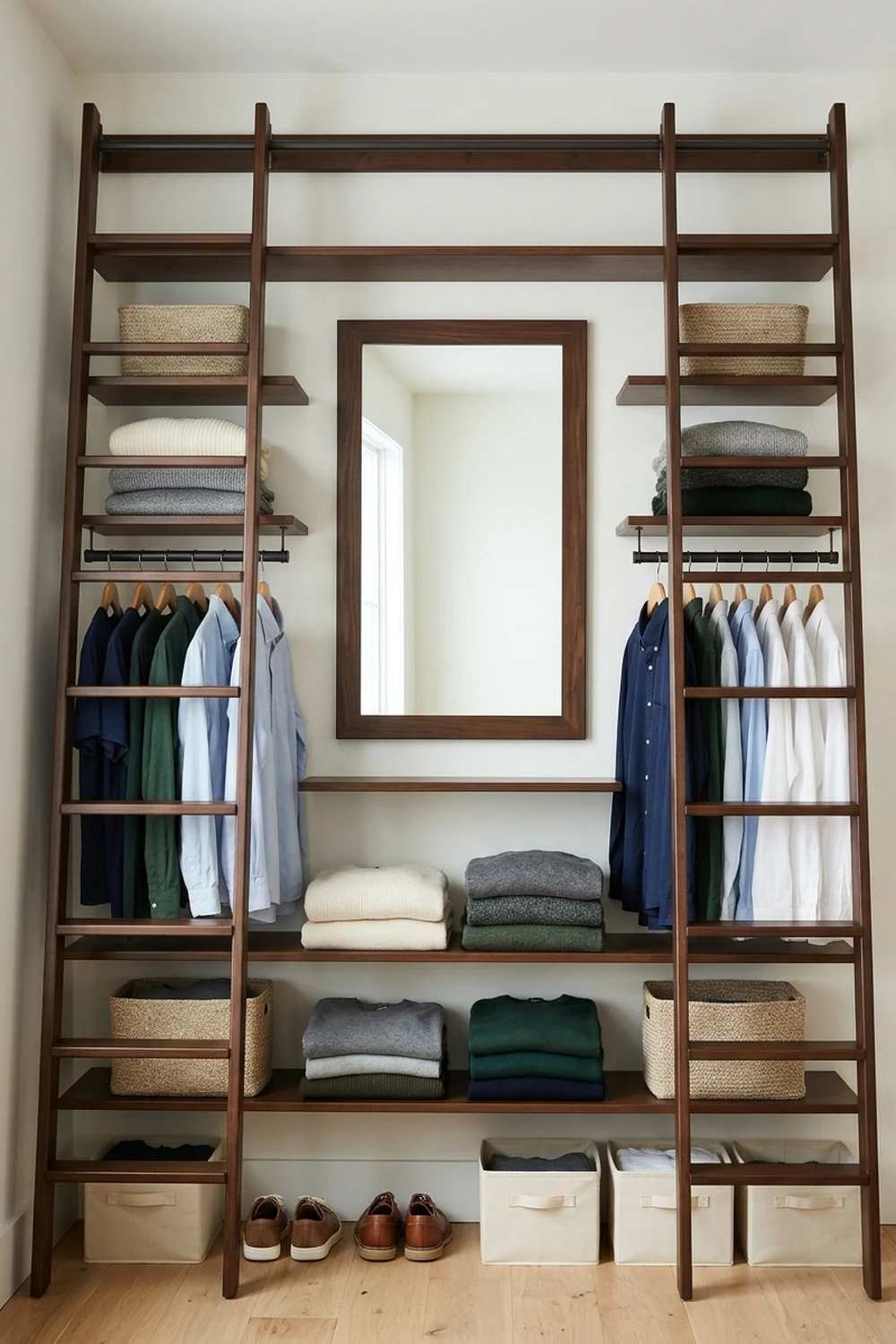
BEFORE: Clothes hung on one crowded rail, pressed tight together, and finding a shirt meant pushing hangers aside and wrinkling three more. The closet looked full, yet getting dressed felt slow and frustrating.
AFTER: Ladder style hangers now hold several pieces vertically on one hook, so each outfit hangs as a set. Shirts, pants, and a jacket share one hanger, and the rail holds twice as much without crowding.
Vertical hangers multiply rail space by stacking pieces downward instead of sideways. They suit small closets and capsule wardrobes where outfits repeat often. Group each hanger as a full outfit to make mornings nearly automatic. This trick works in rentals too, since no tools or drilling are needed at all.
Wall Mounted Rails
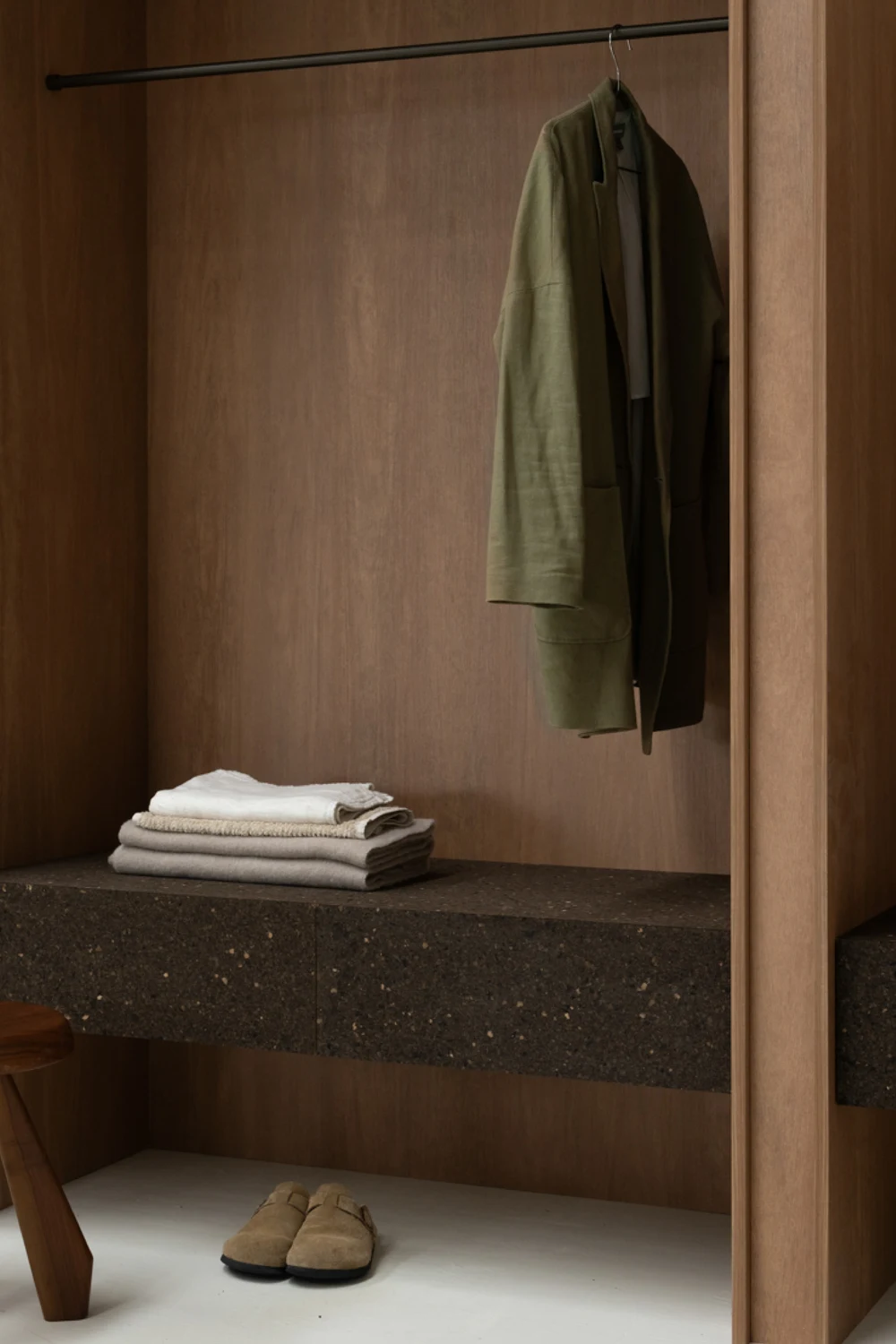
- Find wall studs with a stud finder and mark two points at shoulder height.
- Drill brackets into the studs, not just drywall, so the rail holds full weight.
- Slide the rail into the brackets and tighten the end caps to lock it in place.
- Hang clothes with space between hangers so pieces stay wrinkle free.
Wall rails turn an empty bedroom wall into a boutique style display for favorite clothes. They cost little, install in an afternoon, and suit renters who can patch two small holes later. Keep the rail length under six feet per bracket pair for safe support.
Shoe Display Shelves

| Shelf Type | Holds | Best Spot |
|---|---|---|
| Slanted shelves | Heels and flats | Closet wall |
| Flat shelves | Sneakers and boots | Bedroom corner |
| Clear boxes | Special pairs | High shelf |
| Open cubbies | Daily pairs | Near the door |
Shoe shelves stop the pile by the door and turn footwear into part of the room display. Slanted shelves show each pair clearly, while flat shelves suit tall boots. Keep daily pairs low for fast access, and store special occasion pairs higher where dust stays away.
Basket Drawer Systems

DO:
- Line baskets with washable fabric so small items slide out cleanly.
- Label each basket for socks, belts, scarves, or underwear.
- Pull baskets fully out to find items at the back with ease.
DON’T:
- Do not mix categories in one basket, or the system breaks down fast.
- Do not overfill baskets past the rim, or lids and stacks will jam.
- Do not skip labels, since unlabeled baskets turn into mystery boxes.
Basket drawers bring order to small items that slide off shelves and vanish in deep drawers. Their open tops keep contents visible, and labels help everyone in the house return things correctly. Wash liners monthly so the baskets stay fresh and neat for years of easy use.
Glass Door Cabinets
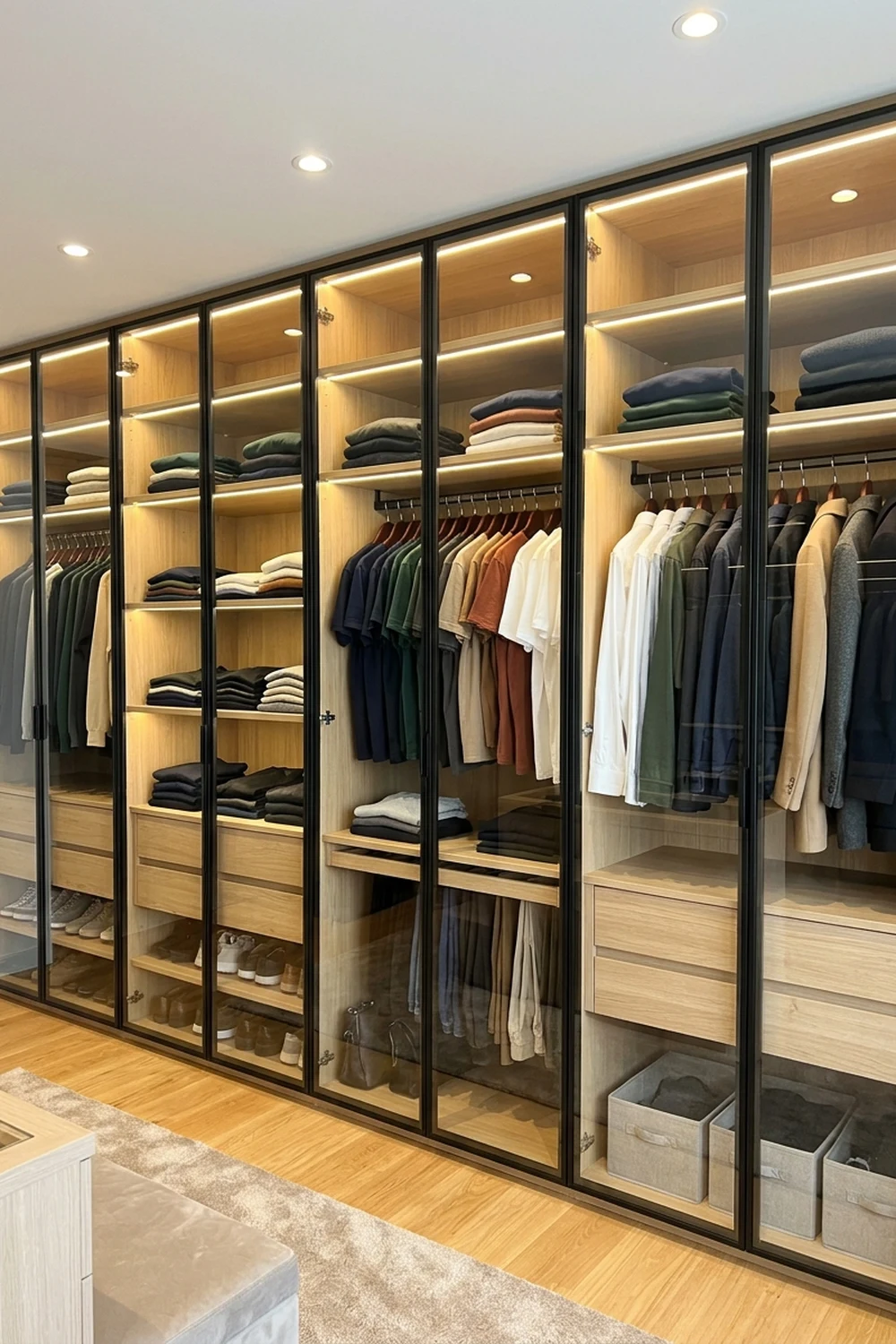
Cost: $80 to $250 for a ready made cabinet.
Time: Two to three hours to assemble and style.
Skill Level: Beginner friendly with basic tools.
Best For: Jewelry, bags, and special pieces.
Glass door cabinets protect special pieces from dust while keeping them visible like a shop display. Bags, jewelry, and folded scarves look lovely behind glass, and the doors stop dust without hiding anything. Keep the inside color light so contents stand out clearly. They suit bedrooms, closets, and dressing rooms alike.
Minimal Capsule Racks
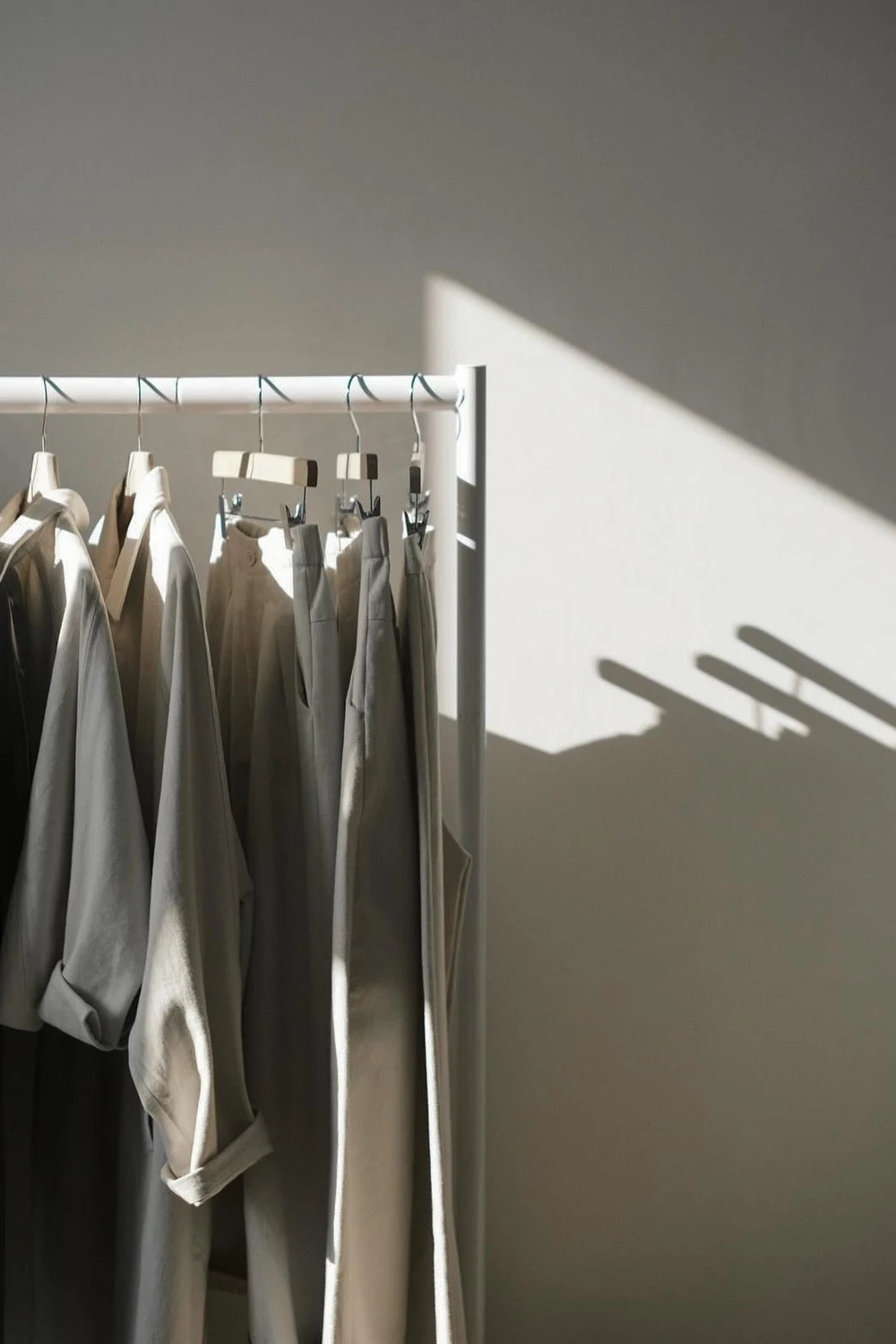
A capsule rack holds only thirty or so pieces you love and wear often. Hang them in outfit order, from work clothes to weekend looks, and keep the rack near a mirror for try ons. The small count forces choices, and getting dressed stops feeling like a search through clothes you never pick.
Rotate the rack each season, swapping heavy coats for light jackets and storing the rest out of sight. This rhythm keeps the display fresh and the choices easy. When a new piece arrives, one old piece leaves, so the rack never creeps back into clutter.
Wooden Crate Storage

- Stack sturdy wooden crates on their sides to form open cubbies.
- Sand rough edges so knitwear never snags on splinters.
- Line crates with fabric for delicate items like silk scarves.
- Label the crate fronts lightly with chalk for easy sorting.
Wooden crates add rustic warmth to a bedroom while costing far less than built in shelving. Their open fronts keep folded clothes visible, and you can restack them as needs change. Seal the wood with clear wax to guard against dust and make cleaning simple.
Corner Clothing Zones
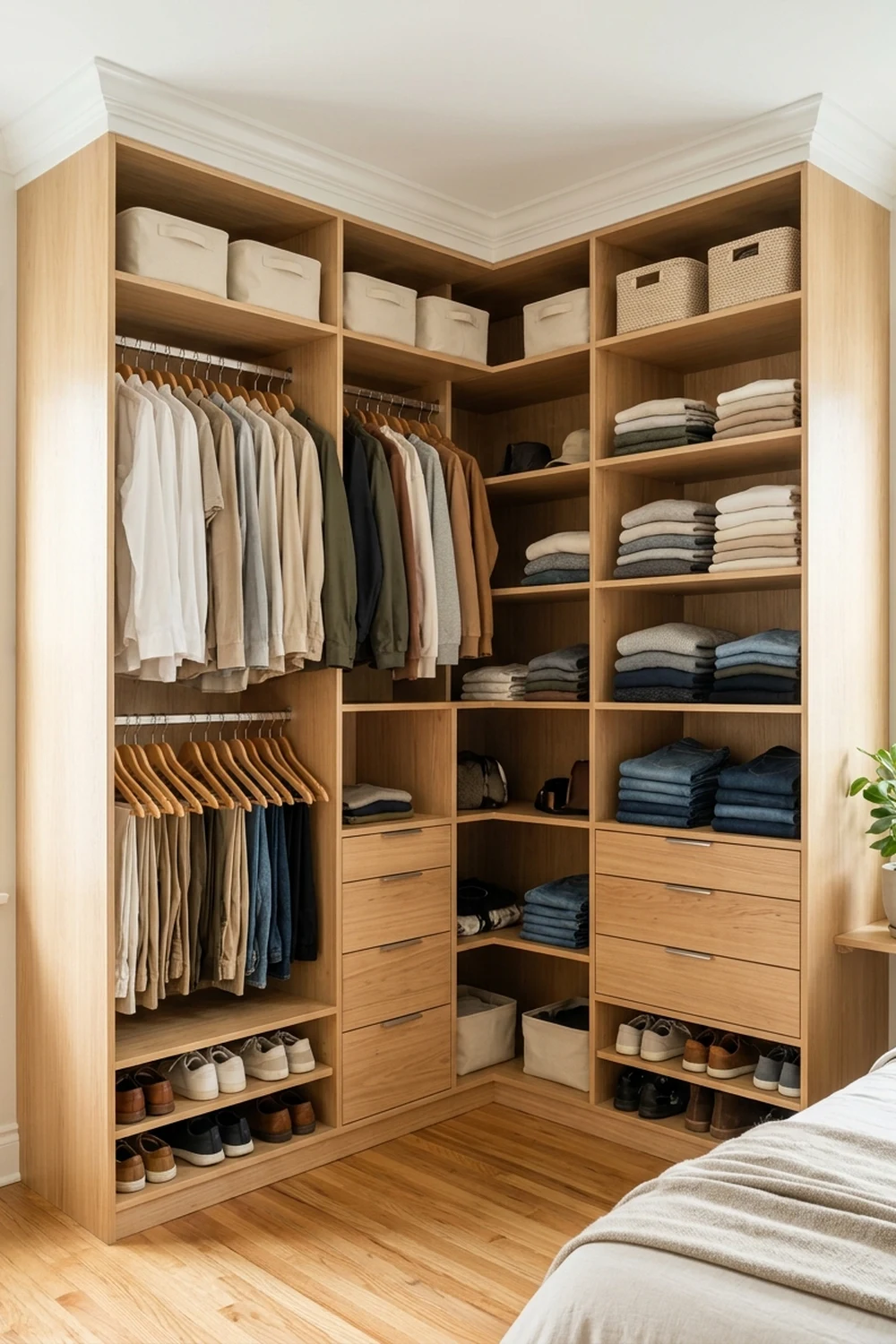
Quick Tip: Turn a bare bedroom corner into a dressing zone with one rail, one small shelf, and a full length mirror. Keep daily outfits on the rail, shoes below, and a stool nearby for putting on shoes, so the corner works as a complete station instead of a dumping spot.
Corners often sit empty, yet they hold a surprising amount of clothing storage when used well. A corner rail uses two walls for support, which makes it sturdier than a single wall rail. Add a small plant on the shelf to soften the corner and make dressing feel pleasant.
Hanging Shelf Organizers

BEFORE: Sweaters and tees piled on one closet shelf slid over each time one item was pulled out. The pile leaned, folded edges blurred, and the shelf looked messy by midweek.
AFTER: Hanging shelf organizers now divide that shelf into six small cubbies, each holding one category. Stacks stay upright, categories stay separate, and the shelf looks tidy all week long.
Hanging organizers hang from an existing rail and need no tools at all. Their fabric cubbies suit folded knits, bags, and accessories that slide around on flat shelves. Pick a sturdy canvas version so the cubbies hold shape even when fully loaded in any closet for years.
Jewelry Display Hooks

- Mount a small hook board near your mirror at eye level.
- Space hooks two inches apart so necklaces never tangle.
- Hang necklaces by length, shortest at the left and longest at the right.
- Add a tiny dish below for rings and earrings you wear daily.
Jewelry hooks turn tangled chains into a pretty wall display and save morning time. Visible necklaces get worn more often, since you spot them while choosing an outfit. Wipe metal hooks monthly to stop tarnish from transferring to chains and cords and keep the display bright.
Color Sorted Rows
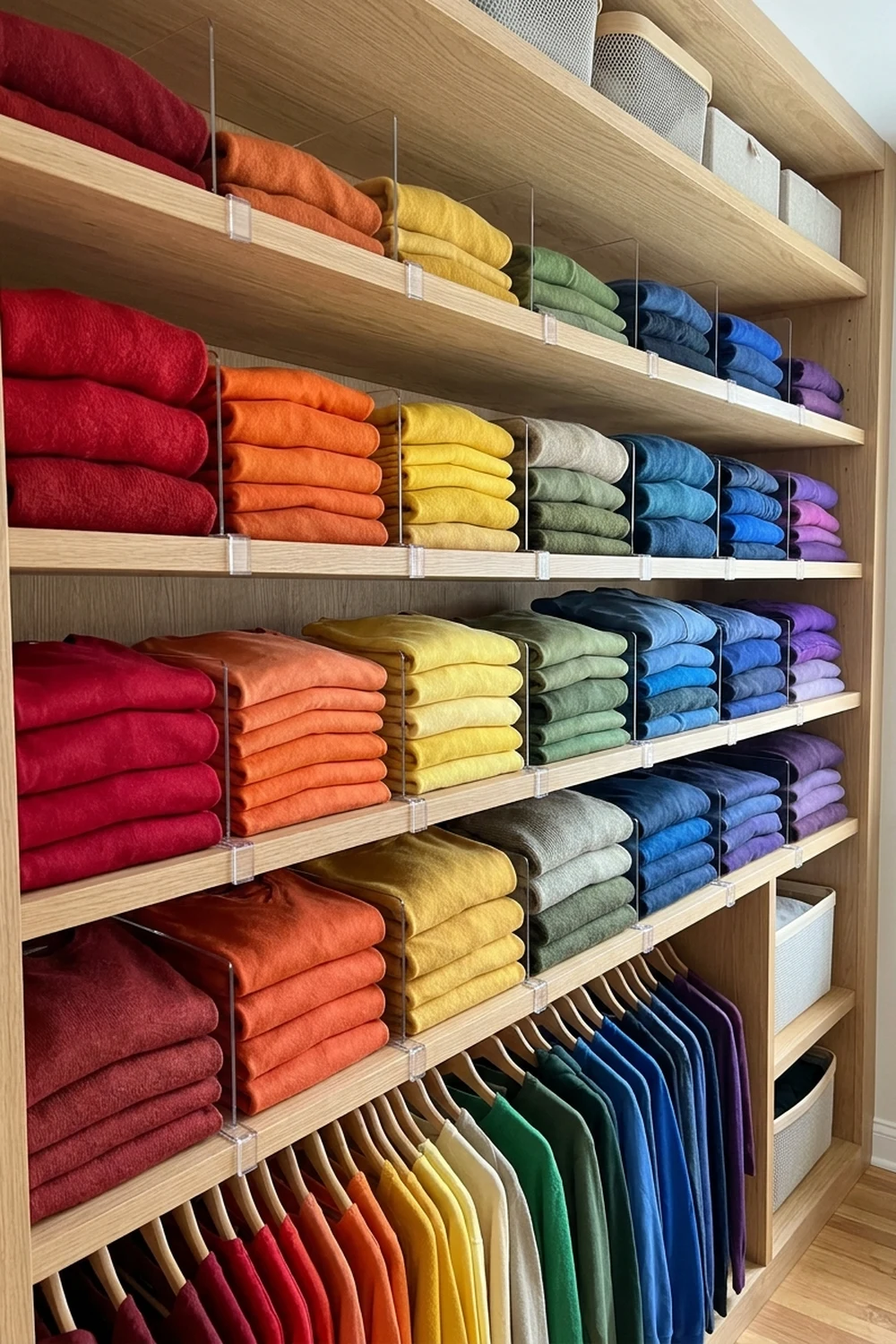
| Sort Method | How It Looks | Best For |
|---|---|---|
| Light to dark | Soft gradient | Small closets |
| By color family | Bold blocks | Large rails |
| By outfit type | Work then casual | Busy mornings |
| By season | Current front | Rotating wardrobes |
Color sorting makes an open rail look like a boutique display and speeds up outfit building. You find a blue shirt in seconds instead of scanning every hanger. Start with light to dark across the rail, then refine into color families once the habit sticks.
Bag Display Ledges
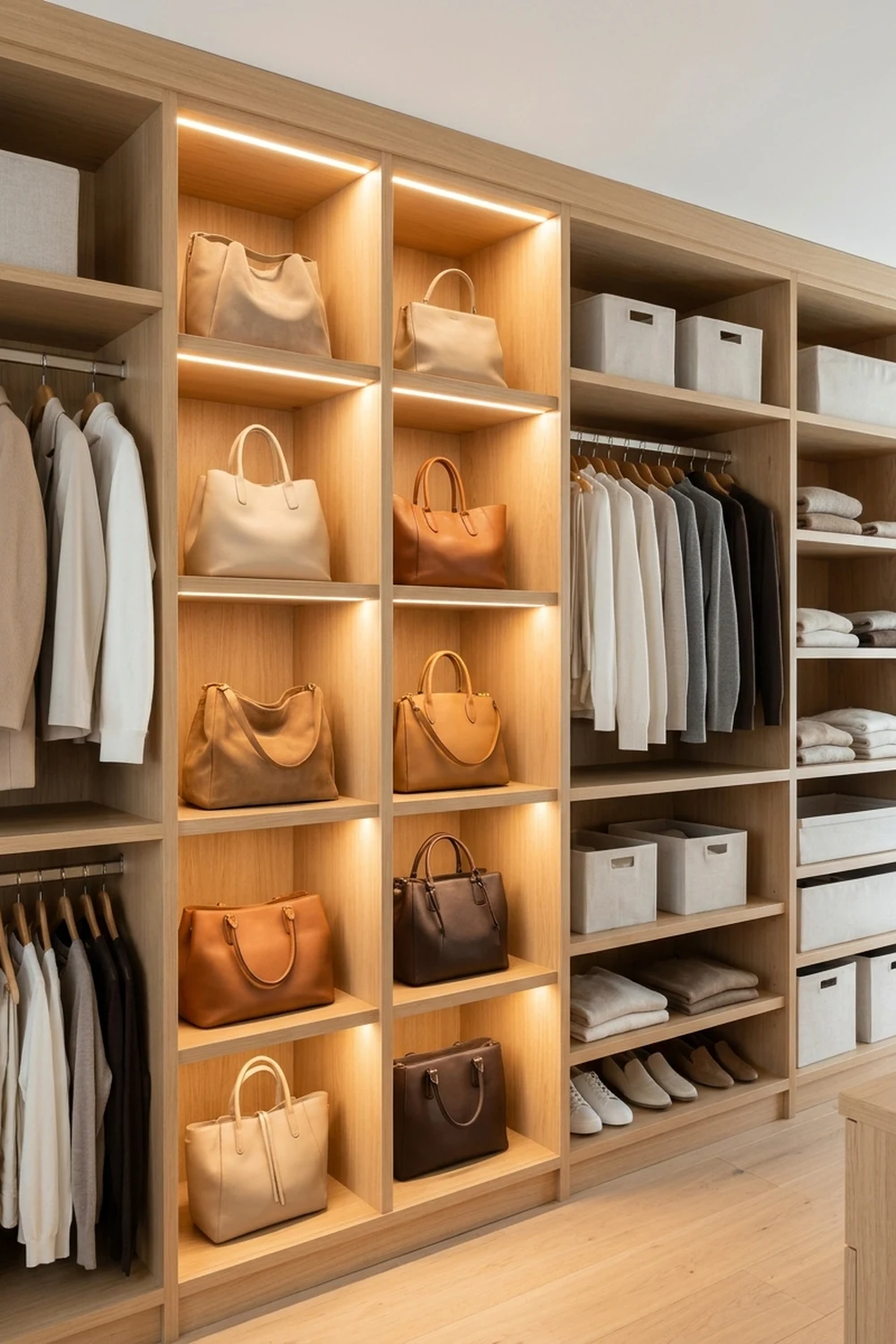
DO:
- Stand bags upright on ledges so shapes stay crisp and visible.
- Stuff soft bags lightly with tissue to hold their form.
- Keep daily bags at hand height and special bags higher up.
DON’T:
- Do not hang heavy bags from thin hooks, or handles will stretch.
- Do not stack bags in deep piles where the bottom ones crush.
- Do not store leather bags in direct sun, which fades and dries them.
Bag ledges treat handbags like display pieces instead of closet clutter. Upright bags show their color and shape, which helps you pick one fast and enjoy the collection daily. Dust bags weekly with a dry cloth, and keep them away from radiators and windows for a display that stays lovely.
Seasonal Swap Shelves
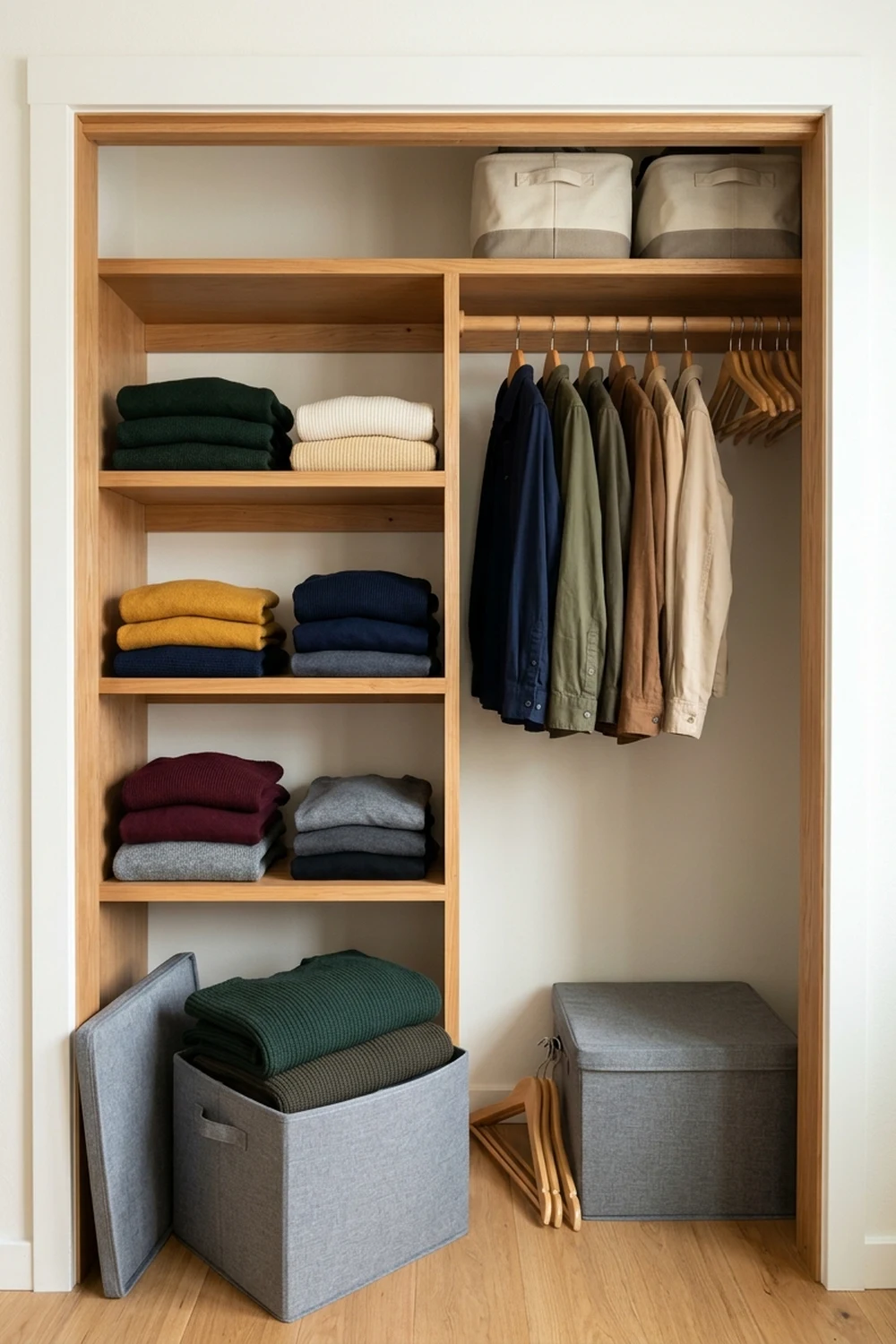
Cost: $20 to $60 for shelf bins and labels.
Time: One afternoon per seasonal swap.
Skill Level: No tools needed.
Best For: Small bedrooms and rentals.
Seasonal swap shelves hold current clothes up front and store off season pieces in labeled bins above. When the weather changes, swap the bins and the shelf contents in one session. This habit keeps the open display light and relevant all year instead of crowded with coats in summer.
Mirror Backed Wardrobes

A mirror behind an open rail doubles light and makes a small bedroom feel larger. Hang the mirror on the wall first, then mount the rail in front with a gap so clothes never touch the glass. The reflection shows the back of outfits too, which helps you check a look from all sides.
Keep the mirror clean with a weekly wipe, since dust shows fast on glass. Frame the mirror in wood or brass to match the room, and the setup will read as furniture rather than storage. This trick suits tiny rooms most of all.
Belt Scarf Bars
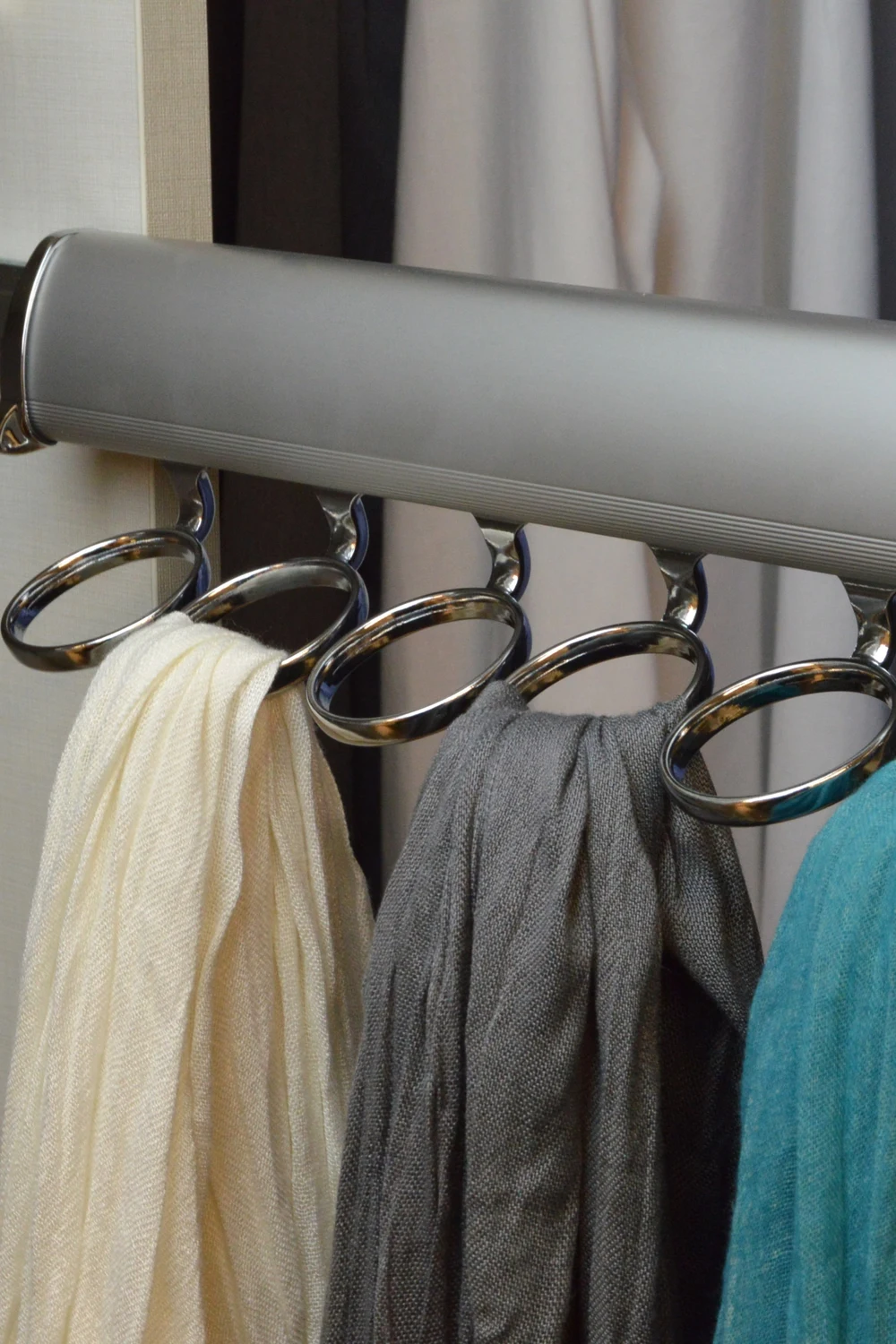
- Mount a slim bar with rings near your rail for belts and scarves.
- Thread each belt through one ring so it hangs straight and visible.
- Drape scarves over rings by color for a soft, pretty row.
- Keep the bar at waist height so grabbing one item never disturbs others.
Belt and scarf bars stop accessories from tangling in drawers where they get forgotten. Rings keep each piece separate and visible, and the bar takes only a few inches of wall. Sort by color or season so the bar looks styled rather than crowded and easy to use daily.
Open Cubby Towers

Quick Tip: Build a cubby tower from stacked boxes, one cubby per category like tees, jeans, and gym clothes. Fold each item to the same width so stacks line up neatly, and place a small basket in the bottom cubby for socks and small extras.
Cubby towers suit folded clothes and accessories that need their own small home. Their grid shape looks tidy even when full, and you can add or remove boxes as your wardrobe changes. Label the front edge of each cubby lightly so the system survives busy weeks.
Hat Display Pegs

BEFORE: Hats piled on a closet shelf crushed each other, and brims bent under the weight of the stack. Favorite hats stayed buried, so the same one got worn every day.
AFTER: Pegs along one wall now hold each hat separately, brims free and shapes intact. Choosing a hat takes seconds, and the wall of hats looks like a cheerful display.
Hat pegs protect brims and crowns far better than stacking ever can. Space pegs eight inches apart so wide brims never overlap. Mount the pegs at varied heights for visual interest, and keep daily hats lowest for fast grabs. This simple wall display suits bedrooms, entries, and mudrooms alike.
Denim Fold Stations
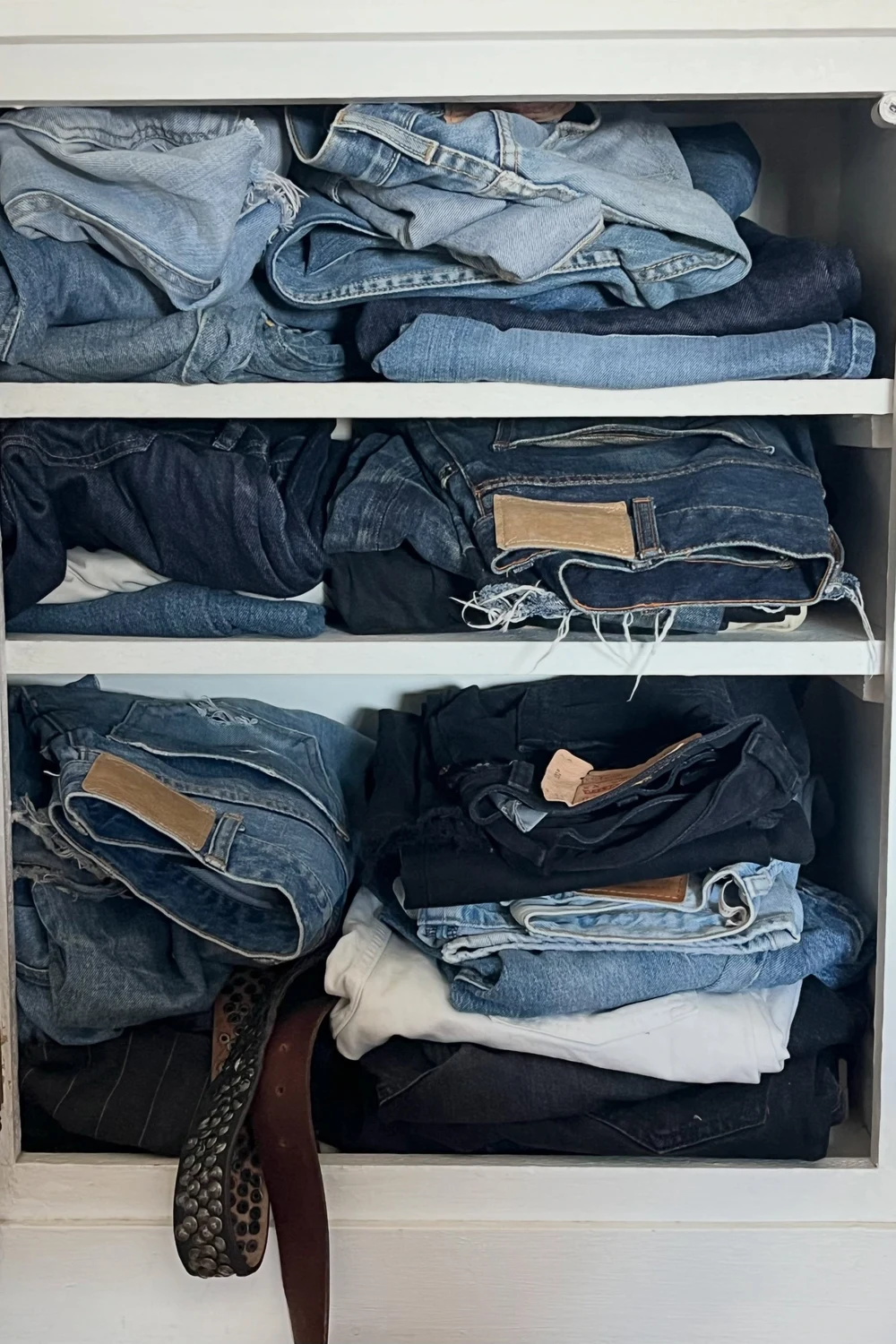
- Sort jeans by wash, from light to dark, before folding.
- Fold each pair to the same width so stacks stay even and neat.
- Stack no more than six pairs per pile to stop toppling.
- Place the most worn pairs at the front of the shelf for quick access.
Denim stations keep jeans visible and easy to grab without unfolding a whole pile. Even stacks look tidy on open shelves, and sorting by wash helps you find the right pair fast. Refold the stacks monthly, since daily pulls slowly loosen even the neatest folds.
Daily Outfit Stations
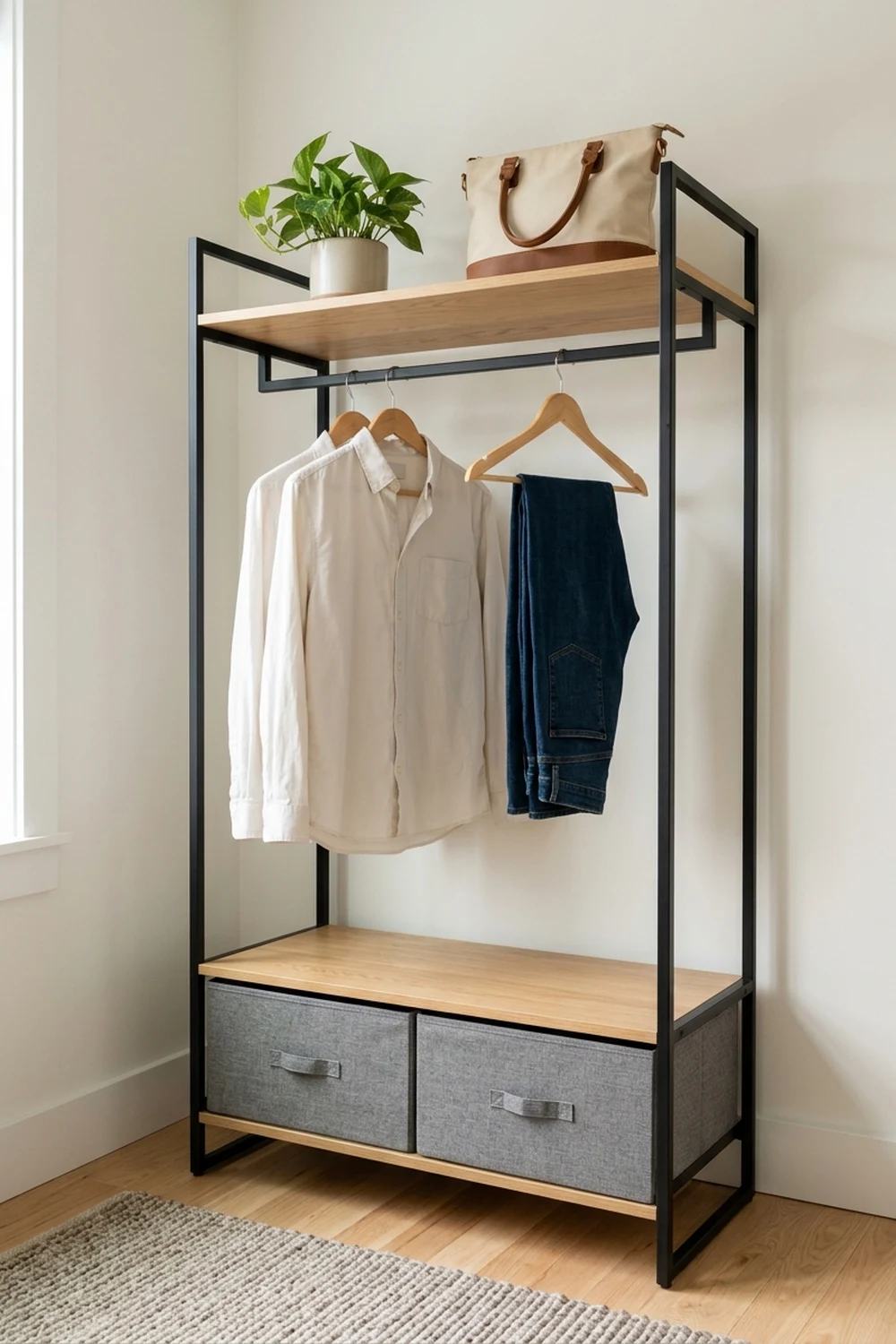
| Station Part | Holds | Purpose |
|---|---|---|
| Top hook | Tomorrow’s outfit | Fast mornings |
| Small tray | Watch and keys | Grab and go |
| Shoe shelf | One pair | No hunting |
| Mirror | Full view | Final check |
A daily outfit station holds everything for tomorrow in one small spot, so mornings run on autopilot. Lay out the outfit the night before, add shoes and accessories, and the whole routine takes minutes. This small habit cuts decision fatigue and keeps the rest of the wardrobe tidy.
Conclusion
These open wardrobe ideas prove that a closet without doors can feel tidy when every piece has a visible home. Start with one rail or one shelf, sort clothes by type, and keep only what you wear within easy reach. Mornings get faster, outfits come together with less stress, and you may rediscover pieces you forgot you owned. Save this list on Pinterest so you can find it when you restyle your bedroom, try the setups that fit your space and budget, and share it with a friend who hates digging through a closet. Your wardrobe can feel open, calm, and easy to use daily.